
Pappu vs Colour Prediction: Two Different Games
Partner casino · 500% up to ₹1 lakh on deposit one · 18+
Pappu Playing Pictures and colour prediction games such as WinGo are two separate products. In Pappu you put chips on twelve everyday pictures and one picture is drawn; a match pays ×10. In colour prediction you bet on colours — green, violet, red — and numbers from 0 to 9. If the screen shows pictures, it is Pappu; if it shows colours and numbers, it is not.
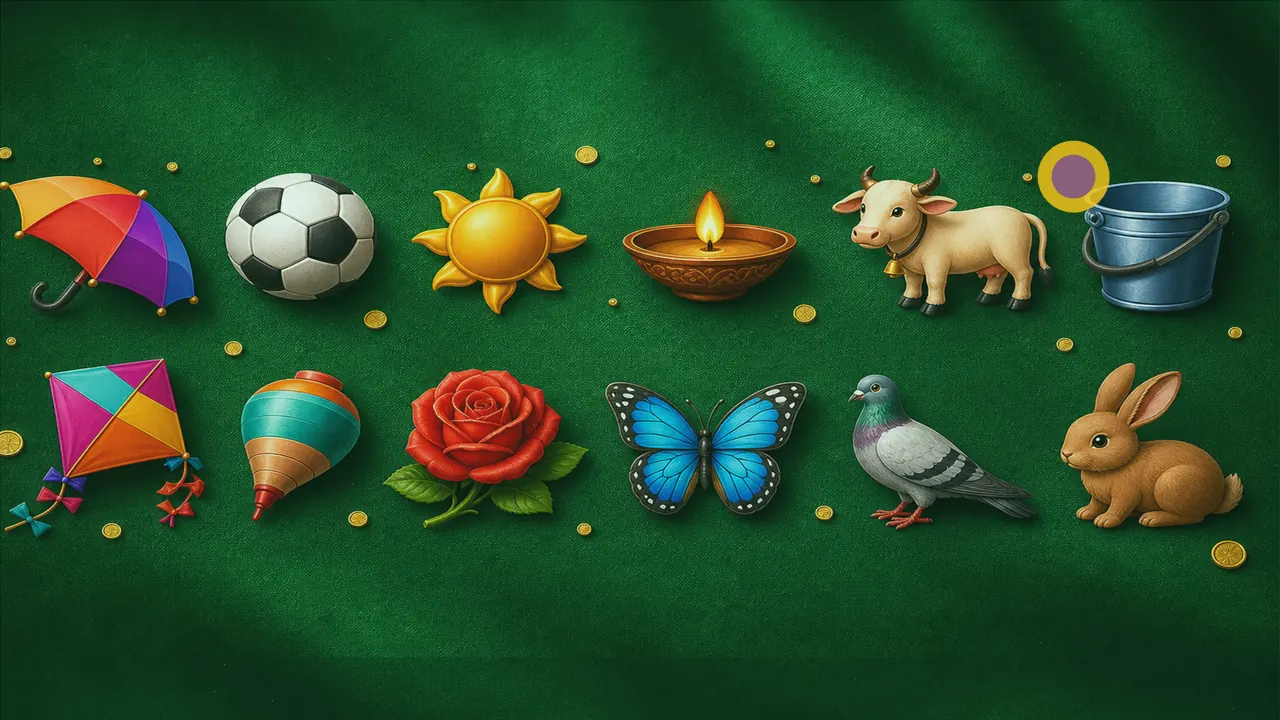
Side by side
| Pappu Playing Pictures | Colour prediction (WinGo and similar) | |
|---|---|---|
| What you choose | One or more of 12 pictures | Colours (green, violet, red) and numbers 0–9 |
| Possible results | 12 pictures, one drawn per round | Colours and numbers from 0 to 9 |
| How a win pays | ×10 on the matching picture, the same for all twelve | Set by that game's own payout rules |
| Extra multiplier | Extra Pay tag on 1–2 pictures, up to ×50 in reviews | No Extra Pay — that tag belongs to Pappu |
| What the screen looks like | Green festive table, picture strip, purple-backed reveal cards | Colour and number bets, usually with a results chart |
| Buttons | Again, Double, Undo, Clear | That game's own controls |
The one line to remember: Pappu is a picture draw, colour prediction is a colour and number game. Nothing on one board is a setting of the other.
Why they get mixed up in search
The confusion is understandable. Both are short rounds with a countdown, both sit in the quick game sections of casino lobbies, and both are searched by nicknames rather than full titles. A person who played one often types the other's name with "vs" to check whether they are the same thing — which is exactly why this page exists.
Two more things feed the mix-up:
- Reused screenshots. Some pages and apps put a colour board under the Pappu name, or a picture board under a colour game's name, because the screenshot gets clicks.
- Shared habits. Colour prediction players are used to reading results charts and trends, and they carry that habit onto the Pappu history strip.
The second one costs real money, so it gets its own section below.
How to tell which game is in front of you in 10 seconds
Open the table and check, in this order:
- 1Look at the betting area. Twelve pictures — umbrella, kite, diya, rabbit and the rest — means Pappu. Coloured buttons and numbers mean colour prediction.
- 2Count the targets. Pappu always has twelve pictures on the strip, never colours as bets.
- 3Look for one payout. Pappu pays the same ×10 on every picture. Different payouts for different bets mean a different game.
- 4Watch one result. Pappu reveals one picture from purple-backed cards. A number or a colour as the result is not Pappu.
- 5Check the buttons. Again, Double, Undo and Clear sit under the Pappu picture strip.
If you want to know the twelve pictures by sight before you open anything, the Pappu game icons page shows them side by side. The full layout of the Pappu screen is on Pappu Playing Pictures game.
How Pappu pays, compared with what people expect
People coming from colour games often expect "safe" bets and "risky" bets. Pappu has neither. Every picture has the same 1-in-12 chance each round and the same ×10 payout. Over time, one picture returns on average 10/12 of the stake before Extra Pay.
Covering more pictures does not change that. Five pictures at ₹10 cost ₹50 a round; if one of them is drawn, it still pays ₹100 on that one ₹10 stake. You win more often and pay more for every round. The arithmetic for every stake level is on Pappu Game payout.
Extra Pay is the only thing that lifts a payout: a random tag on one or two pictures before the reveal, paid only if a tagged picture is drawn. It is not a hint about which picture wins.
Habits that do not carry over
The habit that hurts most is reading the history strip like a colour chart. On the Pappu screen the strip and its % chips show what was drawn, not what comes next. Each round starts fresh at 1 in 12 for every picture.
Gaps that look "due" are ordinary. A picture missing for 8 rounds in a row happens about half the time; for 24 rounds, about one time in eight. Raising the stake because a picture "must come" is the quickest way a calm session turns expensive. Pappu history strip explains what the strip records and what it cannot do.
The same goes for tips, signal groups and "trick" charts sold for either game. Neither game has a pattern to unlock — Pappu Game tricks runs the numbers.
One more name to keep apart: satta or matka results that use the word "Pappu" are neither of these games.
Where to try the picture game
The Pappu Game demo on this site shows the real picture layout on practice credits, which cannot be withdrawn: twelve pictures, a countdown, one draw, ×10 on a match. Ten rounds there and you will not mix it up with a colour board again. For real money, the partner casino button opens a browser lobby where Pappu sits among the JILI games, with 500% up to ₹1 lakh on your first deposit; the platform's terms show the wagering and limits.
FAQ
Is Pappu Game a colour prediction game?
No. Pappu Playing Pictures uses twelve pictures and one draw. Colour prediction uses colours and numbers.
Is WinGo the same as Pappu?
No. WinGo is a colour prediction game with green, violet and red and the numbers 0–9.
Can one casino have both games?
Yes. Lobbies list many quick games side by side, so check the betting area before you stake.
Does a colour trend chart work on Pappu?
No. The Pappu history strip is a record of past draws; every round is 1 in 12 for each picture.
Which picture pays the most in Pappu?
None. All twelve pay ×10, unless an Extra Pay tag is on the drawn picture.
18+. Play for entertainment. Name the game in front of you before you stake, and set a limit.